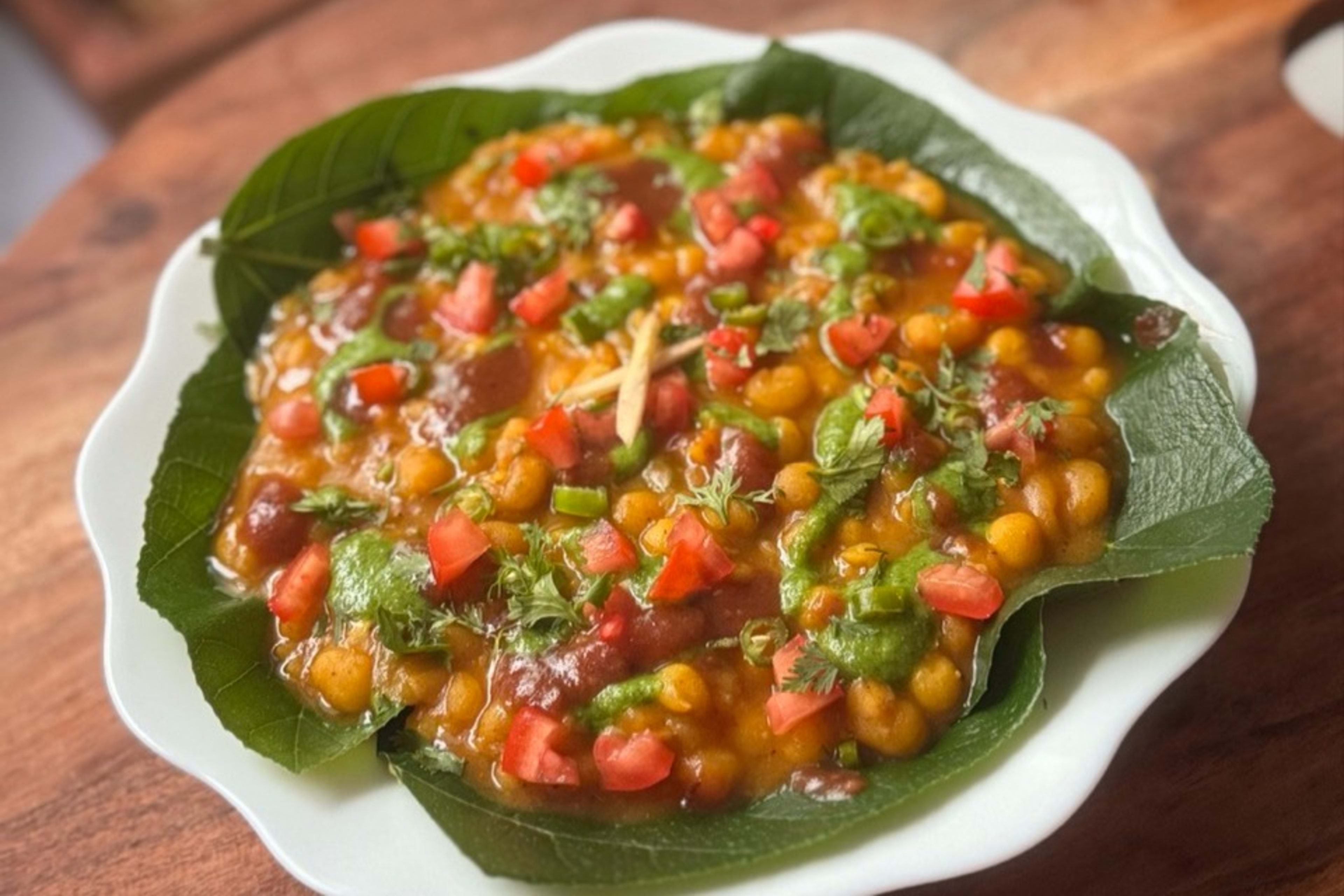
Ragada Chaat
The street-stall chaat your chai has been waiting for all evening
Prep
15 min
Cook
25 min
Total
40 min
Serves
4 people
Cals
310 kcal
Ragada Chaat
The street-stall chaat your chai has been waiting for all evening
foodiegujarati.com/recipes/ragada-chaat
There is a very specific kind of hunger that hits somewhere around 5 in the evening. It is not lunch and it is not dinner. It is the chai-time hunger, the kind that makes you restless, and the only thing that can quiet it is a bowl of proper ragada chaat. Hot, tangy, soft peas mashed with potato, topped with crackly sev and both chutneys, served on a big green leaf like street food should be.
Ragada chaat has its heart in the streets of Mumbai and Gujarat both. The yellow peas, called safed vatana or yellow peas, cooked until creamy and spiced generously, served over a base and crowned with toppings — this is the kind of food that vendors have been making on iron tavas for generations. In Gujarat, it is a festival food, a rainy day food, a Sunday afternoon food. It is also the food you bring out when guests arrive unannounced and you need something ready fast that feels like you worked for hours.
This version is made the way I grew up watching it be made at home, cooked in a pressure cooker for speed, spiced properly, and served the old-fashioned way on big green leaves. It is bold, filling, deeply satisfying, and honestly not hard at all. Make it today. Your 5pm hunger deserves this.
Why You'll Love This
One-Pot Ragada
Everything for the ragada base cooks together in one pressure cooker, saving you at least 30 minutes compared to cooking peas and potatoes separately on an open flame. Less washing up, more eating.
Street-Style Serving
Serving on large green leaves is not just for looks. It keeps the chaat cool underneath, gives each serving a natural bowl, and makes the whole presentation feel like a genuine street-stall plate.
Quick Assembly
Once the ragada is ready, assembly takes under 5 minutes, making this perfect for parties or sudden guests. You can even make the ragada base a day ahead and just reheat and top when needed.
Khushi's Pro Tip
The biggest mistake I see is adding chaat masala too early. I learned this after many flat-tasting bowls. Chaat masala contains amchur and black salt, both of which lose their sharpness when cooked. Add it right at the end, after the flame is off, and the tangy kick stays alive and bold.
Star Cast
Key Ingredients
Yellow Peas
Yellow peas are the soul of this dish. They cook to a creamy, thick texture that holds the spices beautifully and gives ragada its signature body. Do not substitute with green peas — they are too delicate and will not give you that thick, hearty base. White safed vatana work as a close alternative if yellow peas are unavailable.
Boiled Potatoes (grated)
Grating two extra boiled potatoes into the ragada at the end is what thickens it from a soup to a proper chaat base. It also adds a soft, comforting texture that balances the chewiness of the peas. Do not skip this step — without it, the ragada stays too watery and the toppings will sink.
Chaat Masala
Chaat masala is what transforms a spiced pea curry into actual chaat. That tangy, slightly sulfurous, deeply appetizing punch is irreplaceable. Adding it at the end, off the heat, preserves its sharp flavor. If your chaat masala smells flat or old, the entire dish will taste dull — use a fresh tin.
Sev
Nylon sev is the textural contrast that makes every bite interesting. The fine, crispy strands soften the moment they hit the hot ragada, so serve immediately after topping. Using thick sev here is a mistake — it does not have the same delicate crunch and tends to sit on top rather than blend in.
Cook Along
Ingredients
The Ragada Base
- 2 cupsYellow Peas(soaked in water for at least 6 hours or overnight)
- 3 Potatoes(peeled, kept whole for pressure cooking)
- 2 Tomatoes(kept whole for pressure cooking, skins removed after)
- 2 Boiled Potatoes(grated, added at the end to thicken the ragada)
- 2½ cupsWater(for pressure cooking)
The Spice Layer
- ½ tspTurmeric Powder(added at two stages — cooking and finishing)
- 1 tspRed Chilli Powder(adjust to taste; added at two stages)
- 1 tspCoriander Powder
- ½ tspCumin Powder
- ½ tspGaram Masala
- 1 tspChaat Masala(added off the flame at the very end)
- 1 Lemon(juiced)
- 2 Green Chillies(finely chopped)
- 1 tspSalt(or to taste)
The Chaat Toppings
- 4 tbspGreen Chutney(coriander and green chilli chutney)
- 4 tbspSweet Chutney(tamarind and jaggery chutney)
- ½ cupNylon Sev(fine variety for best texture)
- 1 Tomato(cut into small cubes)
- 2 Green Chillies(sliced, optional for extra heat)
- 2 tbspFresh Coriander(finely chopped)
For Serving
- 4 Large Green Leaves(banana leaf, peepal leaf, or lotus leaf — washed and wiped dry)
Instructions
Tap a step number to mark it done as you cook.
Into the Cooker — Building the Base
- Add the soaked yellow peas into a pressure cooker along with about 2½ cups of water. The water should sit about an inch above the peas.
- Add the 3 peeled whole potatoes and 2 whole tomatoes directly into the cooker. Keeping them whole means easier handling later.
- Sprinkle in a pinch of turmeric powder, a pinch of red chilli powder, and salt. These early spices begin flavoring the peas from the inside as they cook.
- Close the pressure cooker lid securely and cook on medium-high flame for 3 whistles. After the third whistle, turn off the gas and let the pressure release completely on its own — do not force it open.
Mashing and Removing the Skins
- Once the cooker has fully depressurized and is cool enough to open safely, lift out the tomatoes first. The skins will have loosened and peeled away easily — discard them.
- Using a large spoon or a potato masher, mash everything together inside the cooker: the peas, the cooked potatoes, and the skinned tomatoes. You want a rough, chunky mash — not a smooth paste. Some whole peas should still be visible.
- The mixture should look thick and creamy at this point. If it seems too dry, add a small splash of water and mix it through.
The Spice Build — Layering the Flavor
- Transfer the mashed mixture to a wide kadhai or a deep pan and place it on low-medium flame.
- Add red chilli powder, coriander powder, turmeric powder, cumin powder, and garam masala. Mix everything together well so the spices coat every part of the ragada evenly.
- Squeeze in the juice of one full lemon and add the finely chopped green chillies. Stir again.
- The mixture should start smelling deeply spiced and earthy. If it smells raw or flat, give it another 2 minutes on the flame.
The Potato Thickener — Making It Chaat
- Grate the 2 separately boiled potatoes directly into the pan. This is the step that transforms a spiced pea curry into proper ragada with body and cling.
- Mix thoroughly so the grated potato blends completely into the ragada. No white streaks of potato should remain visible.
- Cook on low-medium flame for 5 to 7 minutes, stirring every minute or so. The mixture will thicken noticeably and the color will deepen. You want it thick enough to hold its shape in a spoon but still scoopable — not paste-like.
The Finishing Touch — Chaat Masala and Herbs
- Turn off the flame completely before doing this next step.
- Sprinkle in the chaat masala and the freshly chopped coriander. Stir gently. Adding the chaat masala off the heat preserves its sharp, tangy edge — this is what makes the ragada taste like real street chaat and not just a pea curry.
- Taste and adjust salt or lemon juice if needed. The ragada should taste tangy, spiced, and slightly smoky from the garam masala.
The Street-Style Plating — On the Leaf
- Lay a large green leaf flat on a plate or serving tray. A banana leaf, lotus leaf, or any large clean edible leaf works beautifully here.
- Spoon a generous portion of hot ragada onto the center of the leaf, letting it spread naturally.
- Drizzle green chutney in a swirl over the top, followed by sweet chutney. Use both generously — the contrast between the two chutneys is what gives chaat its character.
- Scatter the small tomato cubes evenly over the top, then add sliced green chillies if you want extra heat.
- Finish with a big handful of nylon sev scattered over everything. Serve immediately — the moment sev hits the hot ragada, a clock starts ticking. Eat it while the sev still has its crunch.
Pairs Perfectly With
Storage & Make-Ahead
Ragada base stores well in the fridge for up to 2 days in an airtight container. Reheat gently on a low flame with a small splash of water, stirring as it warms. The toppings — sev, chutney, tomatoes — should always be added fresh just before eating. The ragada base can be frozen for up to 3 weeks; thaw overnight in the fridge before reheating.
Try These Too
Puri Ragada (Classic Mumbai Style)
Instead of serving on leaves, place 4 to 5 small puris on the plate and pour the ragada over them before adding the toppings. The puris absorb the ragada from below while staying crisp on top, giving you a textural contrast in every single bite.
Ragada Patties Chaat
Shape extra boiled and spiced potato into flat round patties, shallow-fry them on a tawa with a little oil until golden and crisp on both sides, then spoon the hot ragada directly over the patties. This is the most filling version and works brilliantly as a full evening meal rather than just a snack.
No-Pressure-Cooker Version
Soak the yellow peas for a full 8 hours, then cook them in a deep pot with enough water for 35 to 40 minutes on medium flame until completely tender and mashable. Everything else in the recipe stays exactly the same — it just takes more patience.
Affiliate
Shop the Recipe

Chaat Masala
A fresh, pungent chaat masala added off the flame keeps the tangy, sharp flavor alive in every bite of the ragada.
Buy on Amazon
Nylon Sev
Fine nylon sev provides the crispy topping contrast this chaat depends on — thicker varieties sit too heavily and lose crunch faster.
Buy on Amazon
Red Chilli Powder
A bright, good-quality red chilli powder added at two stages gives the ragada both color and layered heat throughout.
Buy on Amazon* Some links are affiliate links. Clicking and purchasing may earn a small commission at no extra cost to you.
Frequently Asked Questions
Enjoyed this recipe?
Rate this recipe
Similar Posts


Never Miss a Recipe
From Khushi's Kitchen
to your inbox
New recipes, seasonal specials, and kitchen stories — no spam, ever.
No spam. Unsubscribe anytime.